
Synopsis
In the high-stakes worlds of Aerospace and Automotive manufacturing, a single unidentified part can compromise an entire assembly’s safety and regulatory standing. This blog explores why laser marking has become the non-negotiable gold standard for industrial traceability and compliance. We examine the transition from temporary labels and mechanical stamping to permanent, high-contrast laser identification that withstands extreme heat, corrosive chemicals, and structural stress. We detail how Dynotech’s next-generation marking solutions render even the smallest 1-point fonts and complex Data Matrix codes with absolute legibility. By highlighting our 30+ years of experience in helping OEMs meet stringent safety standards, discover how our Fiber and CO₂ laser systems ensure that every component carries a tamper-proof “digital birth certificate” for its entire operational life.
The Traceability Mandate: Safety Through Identification
In industries where “zero failure” is the only acceptable metric, knowing the exact origin of every bolt and bracket is vital. The Traceability Mandate: Safety Through Identification Whether it is a recall in the automotive sector or a maintenance audit in aerospace, the ability to track a part’s history prevents catastrophe. Precision laser marking provides this security by creating a permanent bond with the material that cannot be scrubbed, peeled, or vibrated off.
Why Laser Marking Outperforms Inkjet and Dot-Peen
Why Laser Marking Outperforms Inkjet and Dot-Peen Traditional inkjet prints can smudge under oily conditions, and mechanical dot-peen markers can create “stress risers” that weaken thin-walled parts. Laser marking is a non-contact process that uses light to achieve high-contrast legibility without compromising the part’s structural health.
Permanent & Tamper-Proof: Built for the Product's Lifetime
Permanent & Tamper-Proof: Built for the Product’s Lifetime means that whether a part sits in a hot engine bay or is exposed to hydraulic fluids, the mark remains as crisp as the day it was made.
Mastering the Materials: Fiber vs. CO₂ Technology
Mastering the Materials: Fiber vs. CO₂ Technology is key to a successful implementation. At Dynotech, we provide Fiber lasers that excel at high-speed marking on metals and hard plastics, while our CO₂ systems are the perfect choice for organic components and specialized composites.
Aerospace Compliance: Marking in Demanding Environments
Aerospace Compliance: Marking in Demanding Environments requires even more.
Heat Resistance and Structural Integrity
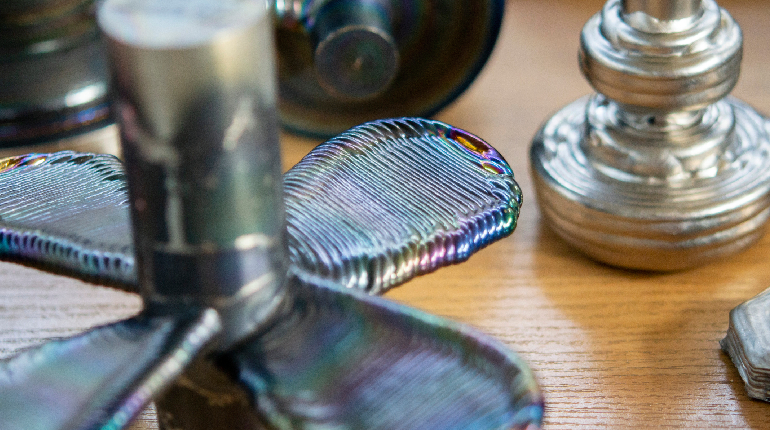
Heat Resistance and Structural Integrity Our lasers can perform “annealing,” a process that changes the color of the metal surface through localized heating without removing any material, preserving the aerodynamic and structural properties of flight-critical parts.
Automotive Excellence: Part Identification and Safety
Automotive Excellence: Part Identification and Safety is where high-volume efficiency meets precision.
High-Contrast Marks for Rapid Automated Scanning
High-Contrast Marks for Rapid Automated Scanning To support modern “just-in-time” manufacturing, our systems produce marks that are optimized for machine vision. This allows robots to scan and verify parts in milliseconds, ensuring that the right component is installed in the right vehicle every single time.
Why Dynotech? 30 Years of Regulatory Expertise
Why Dynotech? 30 Years of Regulatory Expertise With 30+ years of experience, Dynotech doesn’t just sell markers; we provide compliance solutions. We understand the specific marking requirements for Aeronautics & Space and the Automotive supply chain in India. By integrating our 100% innovative technology into your workflow, you are not just marking a part—you are securing your brand’s reputation for safety and quality.
FAQs
Why is laser marking preferred over inkjet for automotive parts?
Inkjet marks can be dissolved by engine oils, fuels, and cleaning solvents. Laser marking is a permanent part of the material surface; it cannot be removed without grinding the metal away, ensuring the part remains identifiable for its entire 15+ year lifespan.
Does laser marking create weak points in aerospace materials?
No. By using specialized techniques like laser annealing, we can create high-contrast marks on sensitive metals like Titanium and Inconel without removing material or creating deep grooves. This maintains the structural integrity and fatigue resistance required for flight.
Can lasers mark very small components?
Yes. Our high-precision laser markers can render legible serial numbers and barcodes in 1-point fonts or smaller. This is essential for marking small electronic components, sensors, and miniature medical or aerospace fasteners.
Is laser marking compliant with global safety standards?
Absolutely. Laser marking is the industry standard for meeting ISO, SAE, and AIAG traceability requirements. It provides the high resolution needed for Data Matrix codes which store significant amounts of data in a tiny footprint.
How fast is a typical laser marking cycle?
Laser marking is incredibly fast, often taking less than one second per part. Because it is a digital process, the system can change serial numbers or data instantly between marks, supporting high-speed automated production lines.