
Synopsis
Laser cleaving has emerged as a global solution for the production and processing of optical fibres, offering unmatched accuracy and consistency compared to traditional methods. Unlike mechanical termination, laser cleaving ensures superior optical quality and precise control of end-face geometry. This technology supports free fibres, fibre ribbons, optical connectors, and packaged waveguides, making it indispensable across industries. With laser beam micromachining at its core, cleaving enables flat or angled facets at micron precision, enhancing performance in telecommunications, medical devices, and advanced sensors. The integration of laser beam delivery components ensures stability and scalability, while fibre-delivered lasers streamline manufacturing. Optical fibre machine splicing and laser micromachining services further strengthen this ecosystem. Laser cleaving’s adaptability, precision, and compatibility with other advanced technologies, such as diamond cutting laser machines and UV nanosecond lasers, position it as the preferred choice for modern optical fibre manufacturing and high-tech research applications.
Table of Contents
-
Introduction to Laser Cleaving in Fibre Manufacturing
-
Why Laser Cleaving is Superior to Mechanical Termination
-
Precision and Versatility in Laser Beam Micromachining
-
Applications of Laser Cleaving Across Industries
-
Enhancing Optical Fibre Manufacturing with Beam Delivery
-
Integration with Splicing and Micromachining Services
-
Dynotech’s Role in Delivering Advanced Laser Cleaving Solutions
Introduction to Laser Cleaving in Fibre Manufacturing
What is Laser Cleaving?
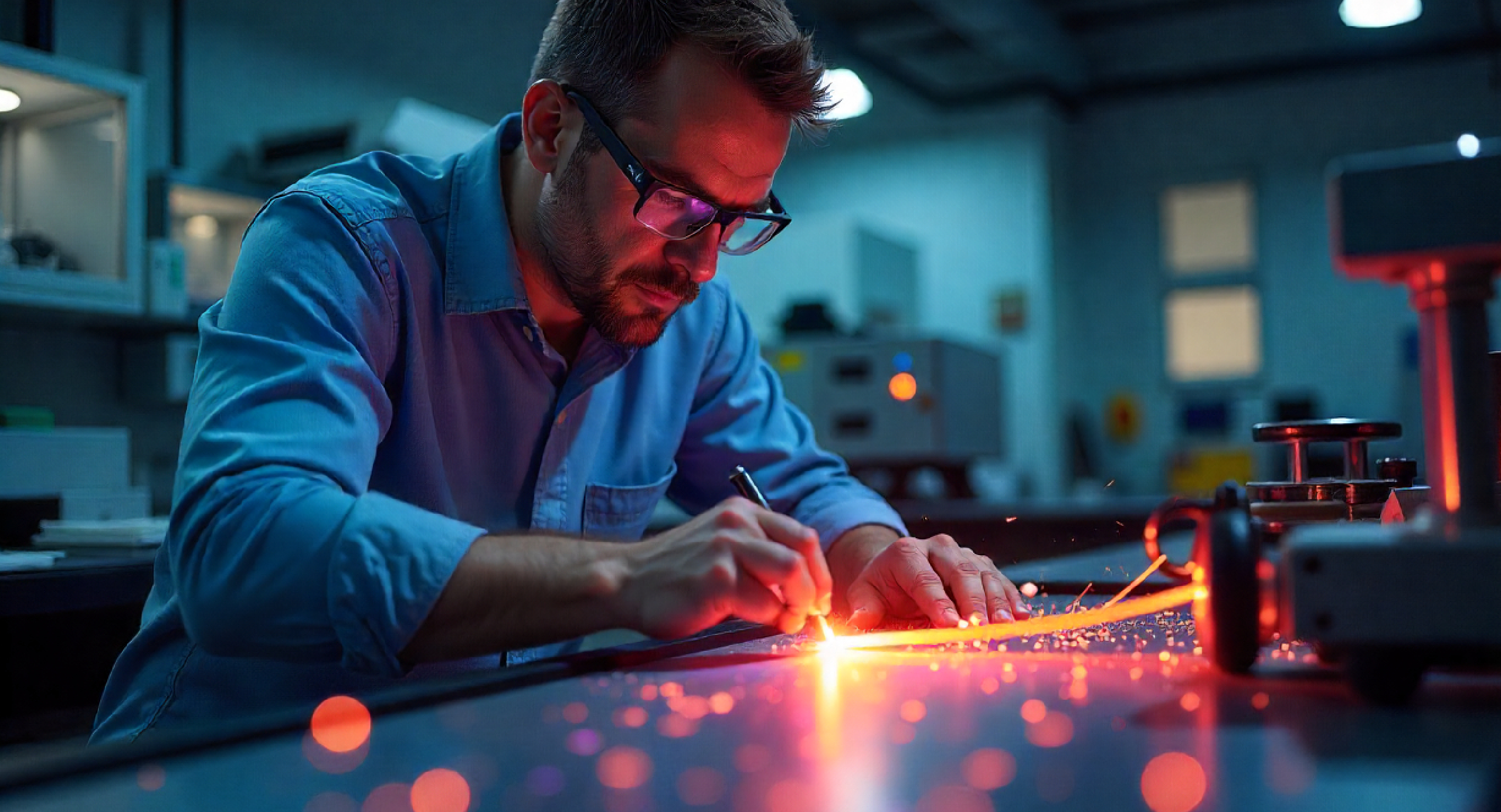
Laser cleaving is the process of using precision laser energy to terminate optical fibres with flat or angled facets. It offers exceptional quality and repeatability compared to mechanical techniques.
Why Laser Cleaving is Superior to Mechanical Termination
Consistent Precision and Control
Unlike mechanical cleaving, laser technology provides control over the end-face angle from 0 to over 45 degrees, ensuring application-specific precision. It also minimises damage to fibre structures.
Precision and Versatility in Laser Beam Micromachining
Micron-Level Accuracy
Laser beam micromachining supports cleaving processes by enabling micron-level accuracy. This precision ensures compatibility with high-performance fibre optics in communications and research.
Applications of Laser Cleaving Across Industries
- Telecommunications: Superior optical performance in fibre networks
- Medical Devices: Creating micro-scale sensors and imaging tools
- Aerospace: Precision fibre solutions for harsh environments
- Research Institutions: Fibre-based sensors for advanced studies
Enhancing Optical Fibre Manufacturing with Beam Delivery
Role of Laser Beam Delivery Components
Beam delivery systems provide stability and repeatability during laser cleaving. With modular components, they ensure that optical fibres are processed with minimal error and maximum efficiency.
Integration with Splicing and Micromachining Services
Comprehensive Optical Fibre Solutions
Laser cleaving works in harmony with optical fibre machine splicing and micromachining services, enabling a complete suite of solutions for fibre manufacturing, packaging, and assembly.
Dynotech’s Role in Delivering Advanced Laser Cleaving Solutions
Partnering with Global Leaders
As a facilitator of cutting-edge technologies, Dynotech collaborates with global partners like OpTek Systems to bring precision laser cleaving solutions to India, supporting industries and research.
FAQs
What is laser cleaving in optical fibre manufacturing?
Laser cleaving uses precision laser energy to terminate optical fibres with flat or angled end faces. It ensures superior quality and accuracy compared to mechanical cleaving, supporting a wide range of fibre types.
Why choose laser cleaving over mechanical termination?
Laser cleaving provides better control, consistency, and optical quality. Mechanical methods can cause micro-cracks and inconsistencies, whereas laser cleaving ensures repeatable, damage-free results for critical applications.
Which industries use laser cleaving technology?
Industries such as telecommunications, aerospace, medical devices, and scientific research rely on laser cleaving. It enables high-quality fibre termination for sensors, networks, and precision instruments.
Can laser cleaving be customised for different fibre applications?
Yes, laser cleaving is highly customisable. The angle of the fibre end face can be adjusted, and it can process free fibres, connectors, ribbons, and packaged fibres to meet specific application needs.
How does laser beam micromachining support cleaving?
Laser beam micromachining provides the micron-level precision required for cleaving processes. It ensures clean cuts, minimal thermal damage, and consistent quality in fibre manufacturing.