
Synopsis
The rise of electric vehicles has amplified the demand for advanced joining technologies, with laser welding machines, battery laser welding machines, and laser welding in automotive industry at the centre of this evolution. Unlike conventional methods, laser micromachining and laser beam micromachining deliver micro-level precision, crucial for battery cells and power electronics. The integration of fiber laser cutting machines and laser cutting machines technology ensures efficient fabrication of lightweight components, supporting range optimisation in EVs. As safety, durability, and scalability become non-negotiable, battery welding machines and battery laser welder applications are setting new standards. This blog explores how lasers are driving the EV battery revolution and the critical role they play in advancing clean mobility solutions.
Table of Contents
-
Introduction: The Laser Advantage in EV Battery Production
-
Why Battery Welding Machines Are Critical for EVs
-
Laser Welding in Automotive Industry: The EV Perspective
-
The Role of Laser Micromachining in EV Battery Design
-
Efficiency of Laser Cutting Machines in EV Component Production
-
Dynotech’s Contribution to EV Battery Welding Innovation
-
Conclusion: Shaping the Future of EVs with Laser Technology
Introduction: The Laser Advantage in EV Battery Production
The shift towards electric mobility demands manufacturing technologies that guarantee precision, safety, and scalability. Laser welding machines and battery laser welding machines provide unmatched accuracy in welding cells, tabs, and modules. These processes are integral to building high-performance batteries with consistent quality. In addition, fiber laser cutting machines and laser cutting machines technology ensure lightweight yet durable battery enclosures. Together, they represent the foundation of modern EV battery production.
Why Battery Welding Machines Are Critical for EVs
Precision Welding with Battery Laser Welder Machines
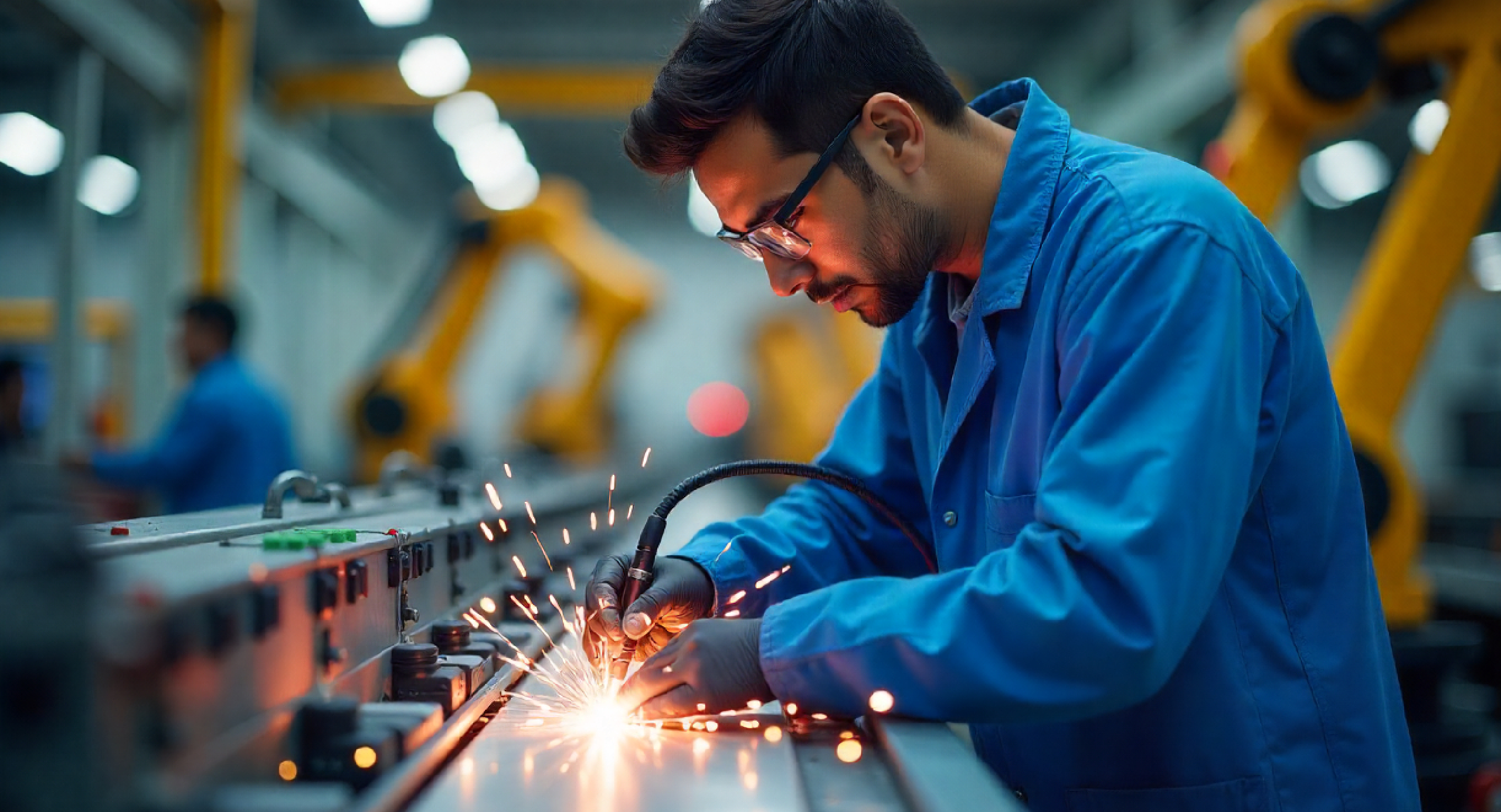
Battery laser welder machines deliver controlled energy to weld thin foils and delicate battery tabs. This ensures minimal heat damage and consistent connections, vital for EV performance and safety.
Applications of Battery Laser Welding Copper and Alloys
Modern EV batteries rely heavily on copper and nickel connections. Battery laser welding copper enables superior conductivity and strength, crucial for long-lasting energy storage systems.
Laser Welding in Automotive Industry: The EV Perspective
Enhanced Reliability Through Laser Welding Machines
Laser welding in automotive industry ensures the mechanical stability and thermal management of EV batteries. This results in longer lifespans, reduced failure rates, and higher safety standards.
Lightweight Manufacturing with Fiber Laser Cutting Machines
Fiber laser cutting machines create lightweight structures for EVs, reducing vehicle weight and improving energy efficiency. The efficiency of laser cutting machines plays a direct role in maximising EV range.
The Role of Laser Micromachining in EV Battery Design
Laser Beam Micromachining for Micro-Connections
Laser beam micromachining is used to create intricate micro-connections in EV control systems and sensors. This ensures seamless integration of electronic safety components within battery modules.
Precision Engineering with Laser Micromachining Systems
Laser micromachining enables EV manufacturers to work with precision at a micro scale, ensuring reliable components in battery management systems and power electronics.
Efficiency of Laser Cutting Machines in EV Component Production
Speed and Quality in EV Sheet Metal Fabrication
The efficiency of laser cutting machines supports high-speed fabrication of battery casings and modules. Their ability to handle large volumes with consistency enhances production throughput.
Customisation in EV Manufacturing Processes
With laser cutting machines technology, manufacturers can design custom geometries for EV components, providing flexibility and innovation in battery assembly.
Dynotech’s Contribution to EV Battery Welding Innovation
Providing Global Laser Welding Technology in India
Dynotech partners with international leaders in battery welding machines and laser welding machines, facilitating access to globally proven solutions for EV manufacturing in India.
Tailored Solutions for Automotive Battery Manufacturing
From battery laser welder applications to large-scale laser welding machines, Dynotech integrates customised solutions that align with the evolving requirements of the EV industry.
Conclusion: Shaping the Future of EVs with Laser Technology
EV battery manufacturing requires a fine balance of performance, safety, and scalability. With laser welding in automotive industry, fiber laser cutting machines, and laser micromachining, manufacturers can achieve precision and efficiency unmatched by traditional processes. Dynotech ensures Indian automotive firms have access to these cutting-edge solutions, empowering them to stay competitive in the global EV market.
FAQs
What makes battery welding machines essential for EV production?
Battery welding machines provide precision, efficiency, and reliability in welding battery tabs and cells. This ensures long-lasting connections critical for EV safety and performance.
How does battery laser welding copper improve EV batteries?
Battery laser welding copper creates secure, conductive joints, essential for energy transfer. This process improves durability and helps manage high currents in EV batteries.
Why is laser welding preferred in the automotive industry?
Laser welding machines deliver stronger, cleaner, and more accurate welds compared to conventional methods. They enhance quality and efficiency in automotive and EV production.
What is the role of fiber laser cutting machines in EV manufacturing?
Fiber laser cutting machines are used to fabricate lightweight structures and casings. Their precision reduces waste and ensures maximum efficiency of laser cutting machines in EV production.
How does laser micromachining support EV battery design?
Laser micromachining and laser beam micromachining allow the creation of precise micro-features in sensors, battery management systems, and circuits, ensuring EV reliability and performance.