
Synopsis
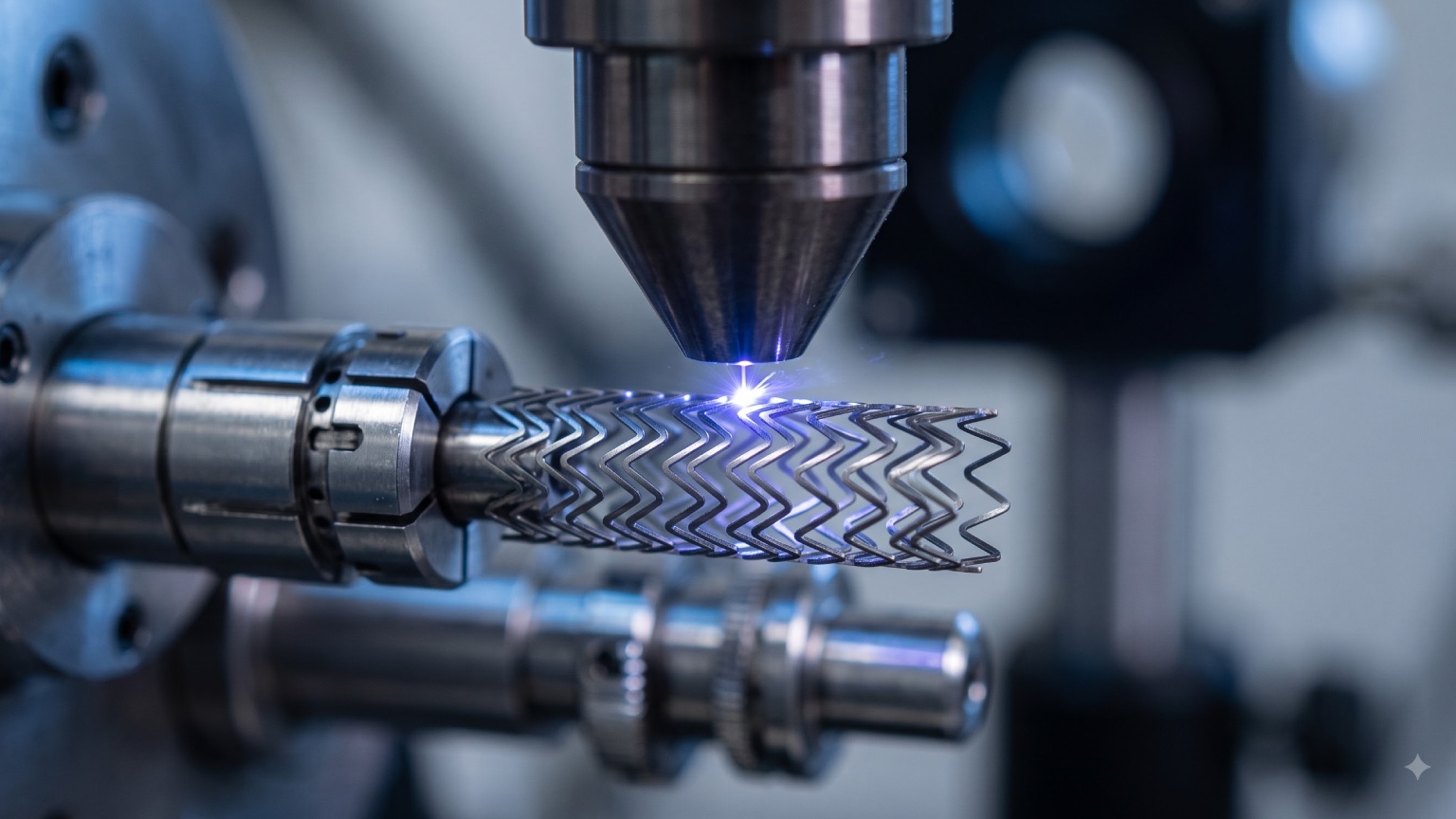
Manufacturing delicate medical implants, neuro-stents, and micro-fluidic channels requires sub-micron cutting precision without inducing thermal warping or structural burrs along the edges. Traditional laser cutting methods generate significant heat affected zones that degrade surrounding material integrity, requiring expensive and slow post-process mechanical grinding. Shifting your production floor to ultrafast femtosecond lasers enables true “cold” machining, ablating material instantly before heat can diffuse into adjacent zones. Dynotech facilitates the direct sales, import, and custom integration of Clark-MXR ultrafast platforms across India’s leading medical device parks.
Our engineering specialists provide deep application consulting to optimize pulse energies, scan speeds, and sub-micron positioning paths for your specific medical alloy or polymer substrate. Additionally, we back every installation with full-scope localized technical support and scheduled preventative maintenance contracts to guarantee 24/7 industrial machine reliability. This end-to-end integration helps Indian medical device manufacturers increase daily output, achieve pristine edge finishes, and pass strict clinical compliance audits with total confidence.
Table of Contents
- Thermal Damage and Micro-Structural Defects in Medical Fabrication
- The Cold Machining Physics of Ultrafast Femtosecond Lasers
- Eliminating Post-Processing Bottlenecks in Stent and Implant Manufacturing
- Accelerating Factory Integration with Turnkey Sales Support
- Optimizing Sub-Micron Parameters via Application Consulting
- Guaranteeing 24/7 Cleanroom Reliability through Preventative Maintenance Contracts
- Elevating Indian Medical Device Manufacturing with Dynotech Expertise
- Complete Clark-MXR Hardware Sales and Engineering Care Across India
Thermal damage and micro-structural defects in medical fabrication
Manufacturing next-generation medical devices such as bio-absorbable vascular stents, ophthalmic surgical blades, and micro-fluidic diagnostic chips demands flawless material execution. When fabricating these miniature components from nitinol, titanium, or delicate polymers, traditional nanosecond and millisecond thermal lasers present severe operational liabilities. Standard thermal cutting tools rely on melting and vaporizing material, which transfers intense thermal energy into the surrounding material substrate. This thermal transfer creates large, porous heat affected zones characterized by micro-cracking, phase transformations, and heavy recast layers along the cut edges. For a life-critical implant, these microscopic thermal defects act as points of structural fatigue, increasing the risk of mechanical failure inside the human body. Furthermore, removing stubborn slag, dross, and heat discoloration requires tedious chemical etching and manual mechanical polishing, which inflates scrap rates, slows down assembly lines, and raises manufacturing costs.
The cold machining physics of ultrafast femtosecond lasers
To eliminate heat affected zones and prevent structural micro-defects during micro-fabrication, medical device manufacturers are rapidly adopting ultrafast femtosecond lasers. Operating with pulse durations shorter than a few hundred femtoseconds (10−15 seconds), these advanced laser sources deliver peak power densities that trigger direct multiphoton ionisation. Material molecules are instantly converted into a high-energy plasma state and ejected from the bulk substrate before heat energy can diffuse into adjacent lattice structures. This unique material interaction mechanism is known as cold machining, enabling sub-micron ablation with zero thermal load on surrounding areas. Because the material is vaporized without melting, the resulting cut edges remain perfectly crisp, smooth, and free of thermal discoloration or burr formation. Utilizing ultrafast cold machining allows medical manufacturers to cut ultra-fine features into delicate heat-sensitive alloys and polymers without compromising their structural or biological performance.
Eliminating post-processing bottlenecks in stent and implant manufacturing
The direct commercial advantage of bringing ultrafast laser cold machining onto your medical device production floor is the complete elimination of post-processing grinding steps. Conventional thermal cutting methods force manufacturers to route every cut component through multi-stage chemical deburring, ultrasonic cleaning, and mechanical electropolishing lines to remove dross and smooth out rough edges. These post-processing steps add days to production lead times, consume expensive chemicals, and frequently distort thin-walled geometries, leading to high part rejection rates. Utilizing ultrafast femtosecond lasers produces clean, burr-free edge profiles straight out of the machine. Removing secondary finishing processes shortens manufacturing cycle times, lowers chemical waste liabilities, and allows medical device companies to achieve high throughput per hour. This digital efficiency enables factory managers to compress production schedules, lower per-unit manufacturing costs, and meet tight delivery targets easily.
Accelerating factory integration with turnkey sales support
Successfully acquiring and deploying an advanced ultrafast laser platform inside a regulated cleanroom environment requires a seamless procurement process and comprehensive turnkey sales support. Importing high-precision femtosecond laser machinery involves complex international shipping logistics, customs classifications, specialized cleanroom handling, and strict safety compliance audits. Dynotech provides complete end-to-end sales facilitation for Clark-MXR ultrafast laser platforms throughout the Indian market, managing every phase of procurement directly. Our turnkey sales support covers hardware selection, cleanroom layout planning, secure logistics, customs clearance, and physical installation by certified field technicians. Providing a transparent local purchasing experience allows Indian medical manufacturers to bypass administrative import hurdles, lower procurement risks, and bring world-class micromachining technology onto their factory floors quickly and hassle-free.
Optimizing sub-micron parameters via application consulting
Achieving high ablation speeds while preserving sub-micron spatial accuracy requires deep laser-material process knowledge and tailored application consulting. Medical components feature diverse material chemistries, ranging from shape-memory nitinol tubes to biocompatible PEEK plastics, each reacting differently to laser pulse energy, repetition rates, and wavelength selection. Dynotech delivers specialized application consulting, working directly with your product development engineers to optimize laser cutting toolpaths, galvo scanner speeds, and focal spot dimensions. Our application specialists conduct extensive material testing and sample validation trials in state-of-the-art testing labs to establish ideal, repeatable process windows. This expert guidance helps your team achieve optimal edge quality, avoid thermal damage, and transition smoothly from early functional prototyping into high-yield automated mass production.
Guaranteeing 24/7 cleanroom reliability through preventative maintenance contracts
Maintaining pristine optical alignment and ultra-stable pulse energy in continuous cleanroom manufacturing requires proactive equipment care and structured service protection. Ultrafast femtosecond lasers contain high-precision optical amplifiers, pulse stretchers, and pulse compressors that must operate within tight thermal and mechanical tolerances. Dynotech provides structured preventative maintenance contracts designed specifically to ensure 24/7 operational reliability for medical device manufacturers. Our comprehensive preventative maintenance contracts include regular site visits by certified service engineers to inspect optical beam paths, align pulse compression optics, clean sealed laser chambers, calibrate power output, and service active cooling units. Implementing this proactive maintenance strategy prevents sudden laser outages, preserves sub-micron cutting accuracy, and extends the operational lifespan of your capital equipment investment.
Elevating Indian medical device manufacturing with Dynotech expertise
Building a competitive, world-class medical device manufacturing sector in India requires a trusted industrial partner with deep technical authority and multi-disciplinary experience. Dynotech stands as India’s premier high-technology integrator, bringing over 14 years of specialized expertise in lasers, semiconductors, precision machining, and production efficiency to every client partnership. We bridge the gap between global technology leaders like Clark-MXR, Inc. and local cleanroom factory execution. Our comprehensive service framework covers hardware sales facilitation, tailored application consulting, cleanroom integration, operator training, and ongoing technical support. By working closely with your manufacturing leadership, Dynotech helps your facility increase production yields, eliminate scrap rates, and maintain strict compliance with global medical device standards like ISO 13485. We are fully committed to helping Indian manufacturers lead the global medical technology market.
Complete Clark-MXR hardware sales and engineering care across India
Our strategic collaboration with Clark-MXR, Inc. allows us to bring world-leading ultrafast femtosecond lasers, picosecond sources, and micromachining instrumentation directly to Indian medical manufacturers and scientific research centers. Dynotech’s unique value proposition lies in our complete local support—we handle sales facilitation, application engineering, cleanroom installation, and ongoing maintenance under a single local contract. Beyond ultrafast laser sources, our wide industrial portfolio includes high-power single-crystal fiber lasers, supercontinuum light sources, precision laser welding systems, and real-time process monitoring tools built for cleanroom applications. We maintain fully stocked spare parts warehouses and deploy certified field technicians across all major industrial manufacturing hubs in India to provide immediate technical support. Partnering with Dynotech guarantees a future-proof, high-precision manufacturing setup that drives long-term commercial success. Contact our technical team today to upgrade your medical fabrication lines with world-class ultrafast laser technology.
FAQs
What is the primary physical mechanism that allows ultrafast femtosecond lasers to achieve cold machining without creating heat affected zones?
Ultrafast femtosecond lasers achieve cold machining by delivering high peak power densities within pulse durations shorter than a few hundred femtoseconds. This ultra-short pulse duration is faster than the time required for thermal energy to transfer from electrons to the surrounding crystal lattice of the material. As a result, the target material absorbs the light energy instantaneously through non-linear multiphoton absorption, converting the solid directly into a high-energy plasma that expands away from the workpiece. Because the material is vaporized before heat can conduct into adjacent areas, the surrounding material experiences no thermal load, eliminating heat affected zones, melting, and thermal distortion completely.
How does eliminating secondary deburring and electropolishing steps improve the overall economics of medical stent manufacturing?
Eliminating secondary deburring and electropolishing steps improves manufacturing economics by removing slow, labor-intensive post-processing bottlenecks and lowering production costs per unit. Traditional thermal laser cutting leaves heavy slag, melt dross, and heat discoloration along stent struts, requiring multi-stage chemical etching and electropolishing to smooth the surfaces. These chemical steps add hours to cycle times, consume expensive toxic chemicals, and often over-etch thin stent walls, leading to high part rejection rates. Ultrafast laser cold machining produces clean, burr-free edges straight out of the machine, allowing stents to move directly to final inspection, drastically shortening lead times and raising daily factory throughput.
What specific services are included in Dynotech's turnkey sales support for Clark-MXR micromachining systems in India?
Dynotech’s turnkey sales support includes a complete, hassle-free procurement and installation framework designed to simplify hardware acquisition for Indian medical device manufacturers. We manage international hardware logistics, secure air freight, customs import clearances, tax compliance, and cleanroom delivery. Once the equipment arrives on site, our certified field engineers handle physical positioning, optical alignment, software integration, and initial process calibration. We also provide comprehensive operator training for your engineering staff to ensure smooth technology transfer. This end-to-end support removes technical and administrative setup risks, allowing your facility to reach full production readiness rapidly.
How does specialized application consulting help medical device manufacturers establish certified, repeatable production parameters?
Specialized application consulting helps medical device manufacturers establish certified process parameters by providing tailored laser-material interaction testing and toolpath optimization. Medical components use diverse advanced materials, such as shape-memory nitinol alloys, platinum-iridium, and bio-resorbable polymers, which require specific pulse energies, repetition rates, and scan speeds to cut cleanly. Dynotech’s process specialists perform material testing in advanced applications labs to identify the exact operating window for your specific product geometry. This expert guidance ensures high edge quality, sub-micron dimensional accuracy, and repeatable results, helping your engineering team pass strict regulatory compliance audits easily.
Why are structured preventative maintenance contracts critical for maintaining sub-micron accuracy in 24/7 laser manufacturing lines?
Structured preventative maintenance contracts are critical because ultrafast laser systems rely on ultra-precise optical alignments, pulse stretchers, pulse compressors, and active cooling units that must operate within tight tolerances. In a 24/7 continuous manufacturing environment, minor optical mirror drift, laser diode degradation, or cooling temperature fluctuations can cause pulse energy instabilities and cut quality variations. Scheduled preventive maintenance visits by certified service engineers ensure that optical paths are cleaned, beam alignment is adjusted, and laser output is re-calibrated regularly. This proactive care prevents sudden equipment breakdowns, maintains sub-micron cutting tolerances, and protects your capital asset.
Can ultrafast femtosecond lasers process heat-sensitive bio-absorbable polymers without causing chemical degradation along the cut edge?
Yes, ultrafast femtosecond lasers can process heat-sensitive bio-absorbable polymers, such as PLGA and PLLA, without causing chemical degradation or polymer charring along the cut edge. Standard thermal lasers generate heat that degrades delicate polymer chains, altering the material’s bio-absorption rate and structural strength. Femtosecond cold machining vaporizes the polymer molecules instantly through non-linear optical absorption, leaving the surrounding polymer chemistry completely intact and free of thermal discoloration or charring. This precise cold cutting capability is essential for manufacturing next-generation bio-absorbable vascular scaffolds and drug-delivery micro-implants safely.